Home · Therapies

Therapies and services

Let's find a clearer path to better movement.

You do not need to know the name of a service in advance. Describe what you want to do again. This is an overview of the support the practice offers.

A plan is not picked from a price list. It is shaped after a conversation. The services below describe kinds of work, not packages or durations, because those depend on the person and on medical advice.

None of them replaces a doctor's diagnosis, and none of them promises a cure.

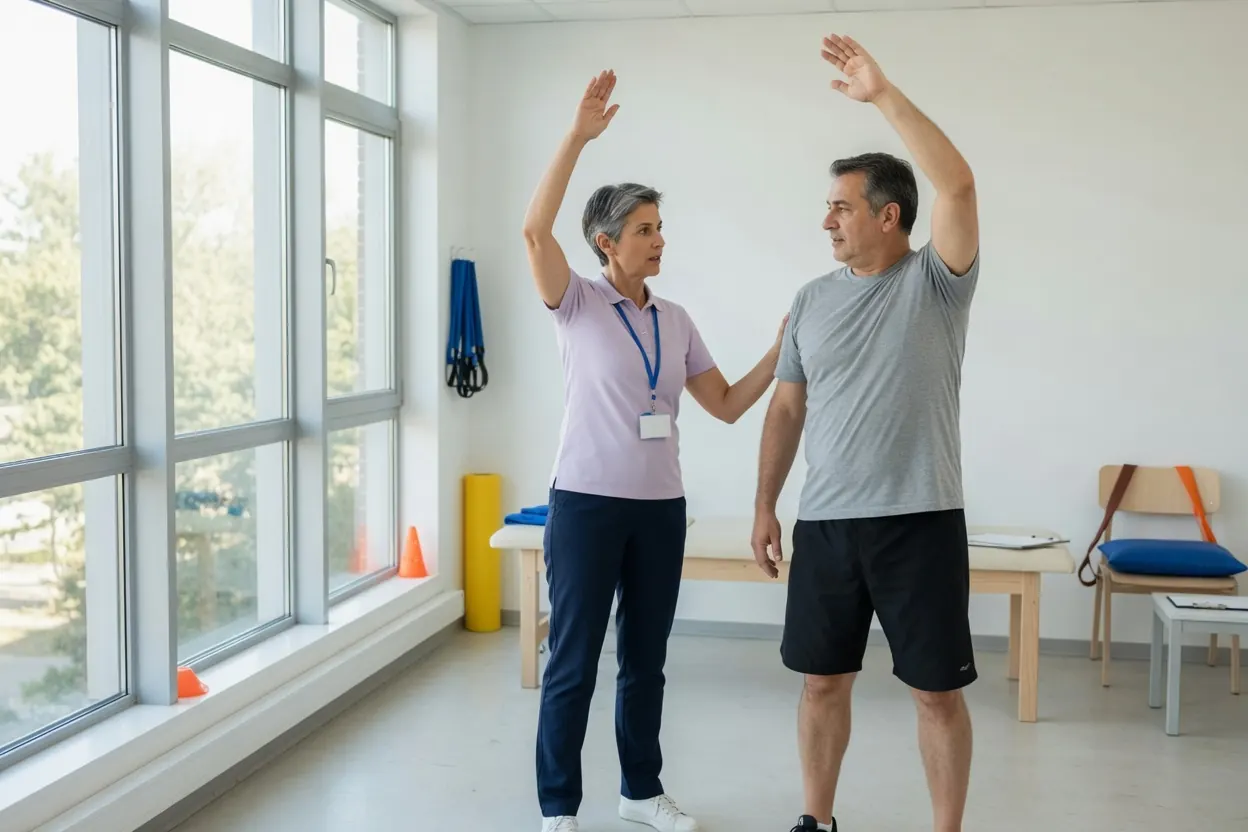
A physiotherapist demonstrates an arm raise while a patient follows in a bright room

01

Individual physiotherapy

Individual physiotherapy starts with you: what your day asks of your body, what slows you down, and what you want to get back to. There is no template that fits everyone.

In a session we look at a movement that matters to you, agree a first goal small enough to keep, and choose what is worth repeating at home. The plan changes when your day changes.

  • A talk about habits, work, and activity
  • A look at a movement that matters to you
  • A first goal and practice until the next visit
Book this therapy

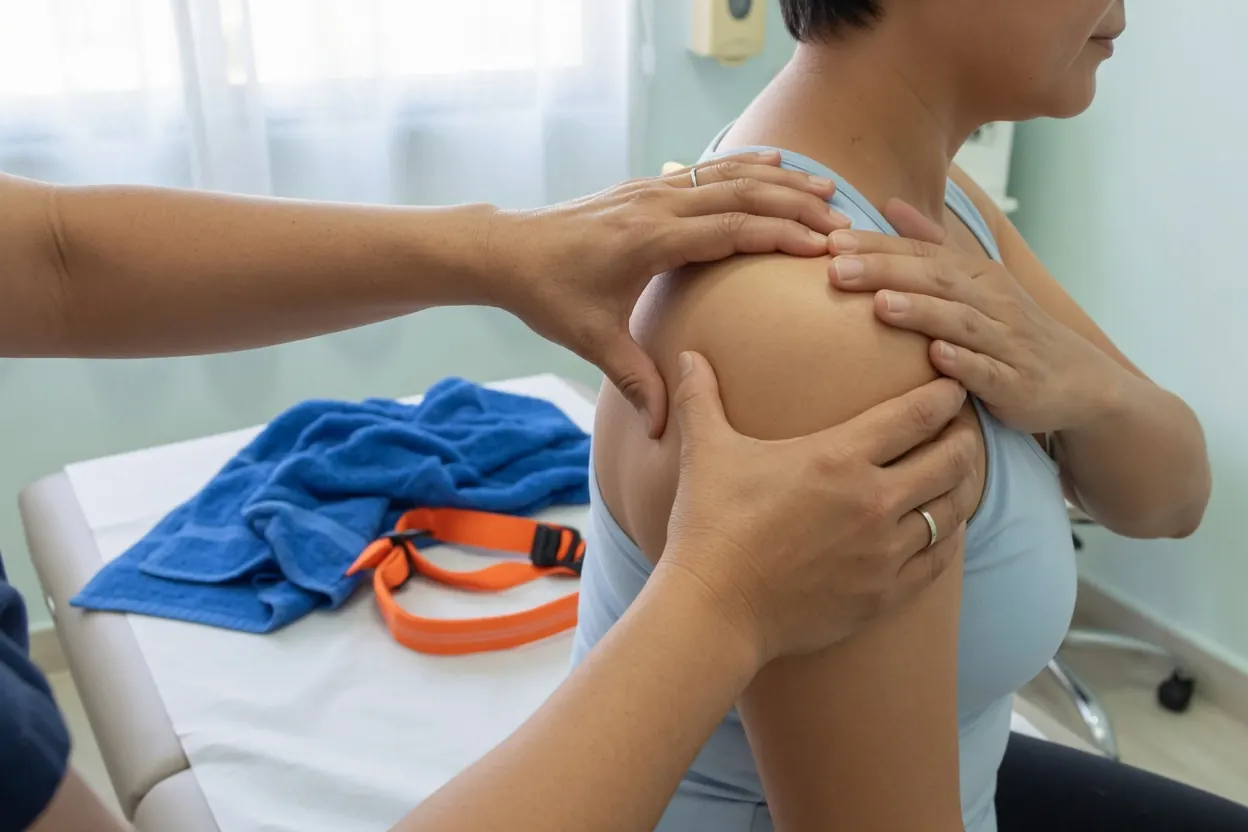
A physiotherapist's hands support an adult patient's shoulder during manual therapy

02

Manual techniques

Manual techniques are hands-on: guiding a joint, working with muscle, or helping a movement happen with less effort. They do not replace exercise. They often make exercise easier to start.

We use them when stiffness or sensitivity gets in the way of a movement you want back. The dose depends on what you can tolerate that day, not on a fixed script.

  • Hands-on work with a clear explanation
  • A movement you try again afterwards
  • An agreement on what not to force before the next visit

Book this therapy

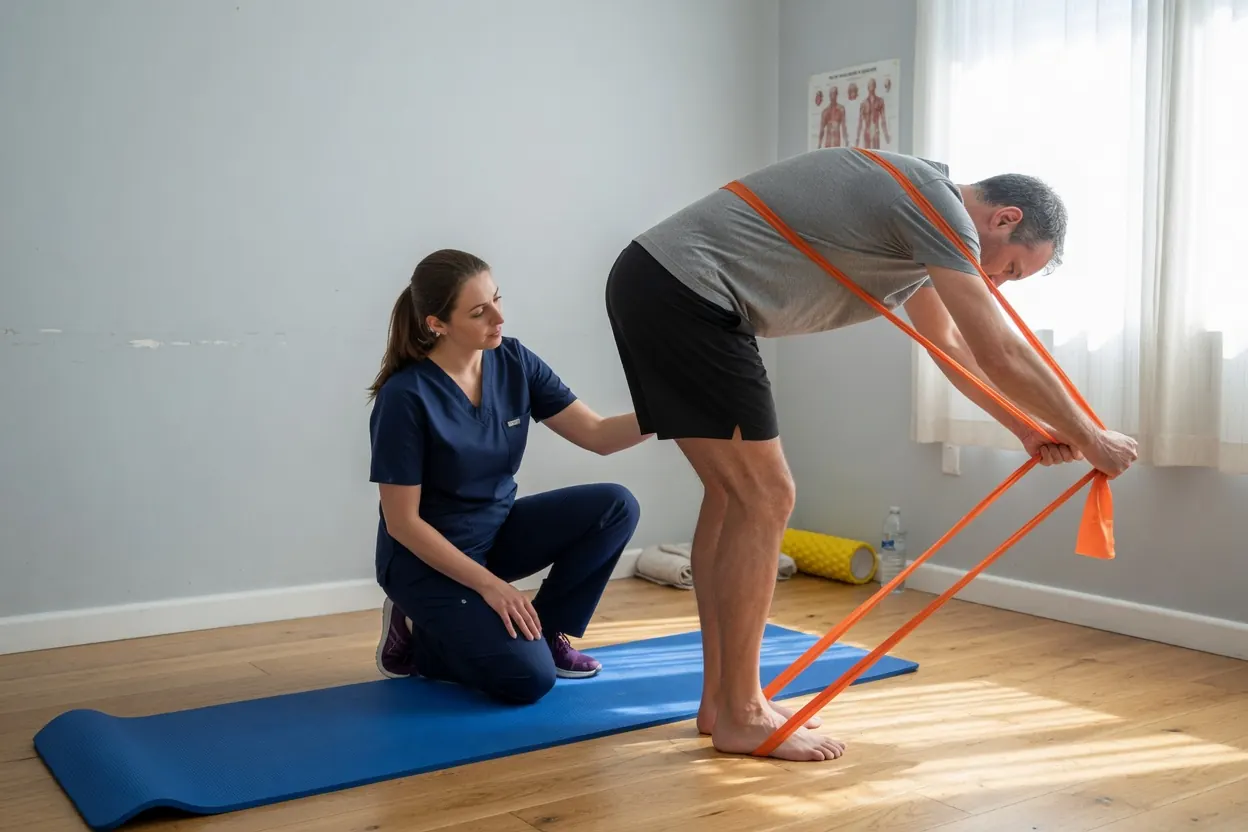
A patient hinges forward with a band while a physiotherapist kneels beside him

03

Rehabilitation after injury

After an injury, surgery, or a long time off, the body needs a way back, not a leap. Rehabilitation at FizioBalance builds that way in steps you can explain and repeat.

If you have a report or a doctor's advice, bring it. It helps decide what is sensible and what is still too soon. We do not promise a date or a result. We watch how movement tolerates load and adjust.

  • Respect for medical advice when you have it
  • Steps from quiet movement toward daily life
  • Adjustments when a day is easier or harder

Book this therapy

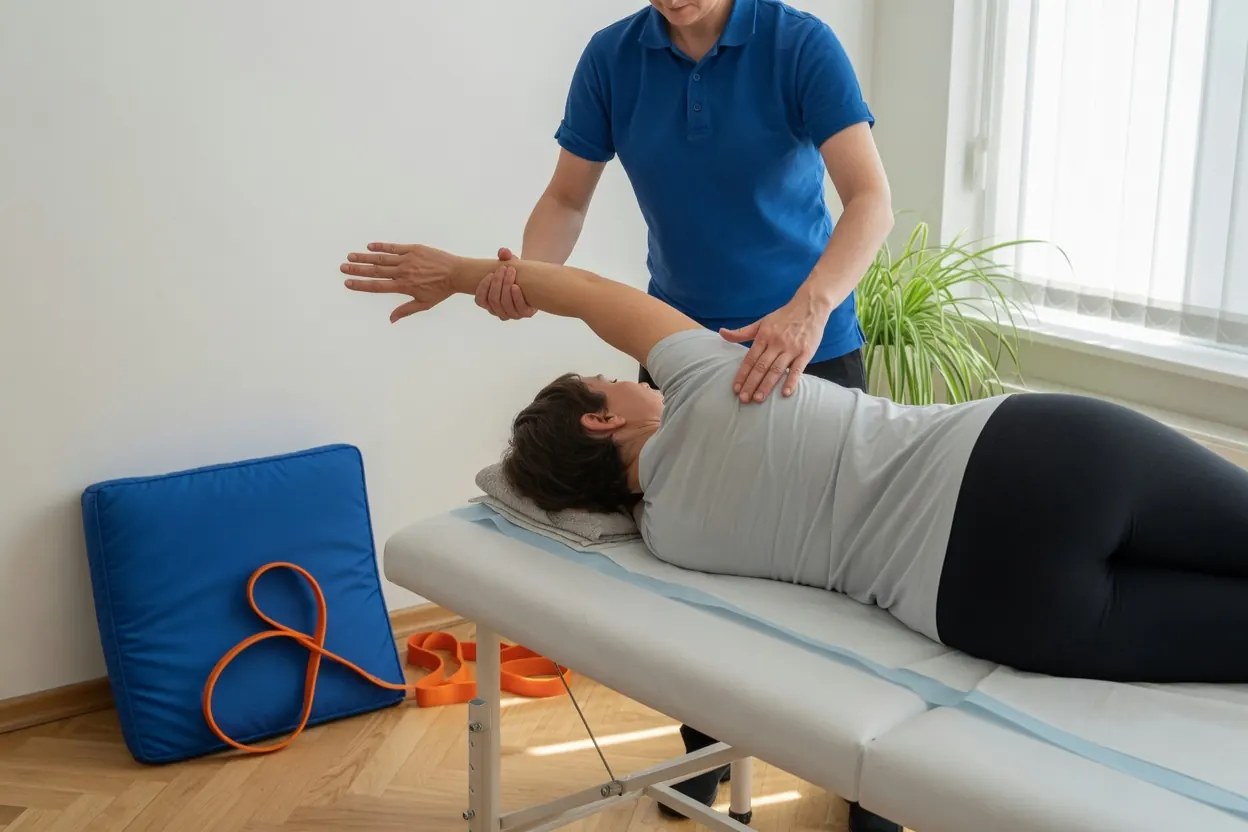
A patient lies on her side while a physiotherapist guides a slow arm and chest movement

04

Therapeutic exercise

Therapeutic exercise is not a list from a magazine. We choose a few movements aimed at what you are missing: strength, control, balance, or a calmer way of moving.

Each exercise should be clear enough to repeat without us. If it is too hard, we make it smaller. If it is too long, we shorten it. Three repetitions that fit a Tuesday beat a programme that stays on paper.

  • A few exercises, shown clearly
  • A dose you can actually repeat
  • Progress only after the previous step feels familiar

Book this therapy

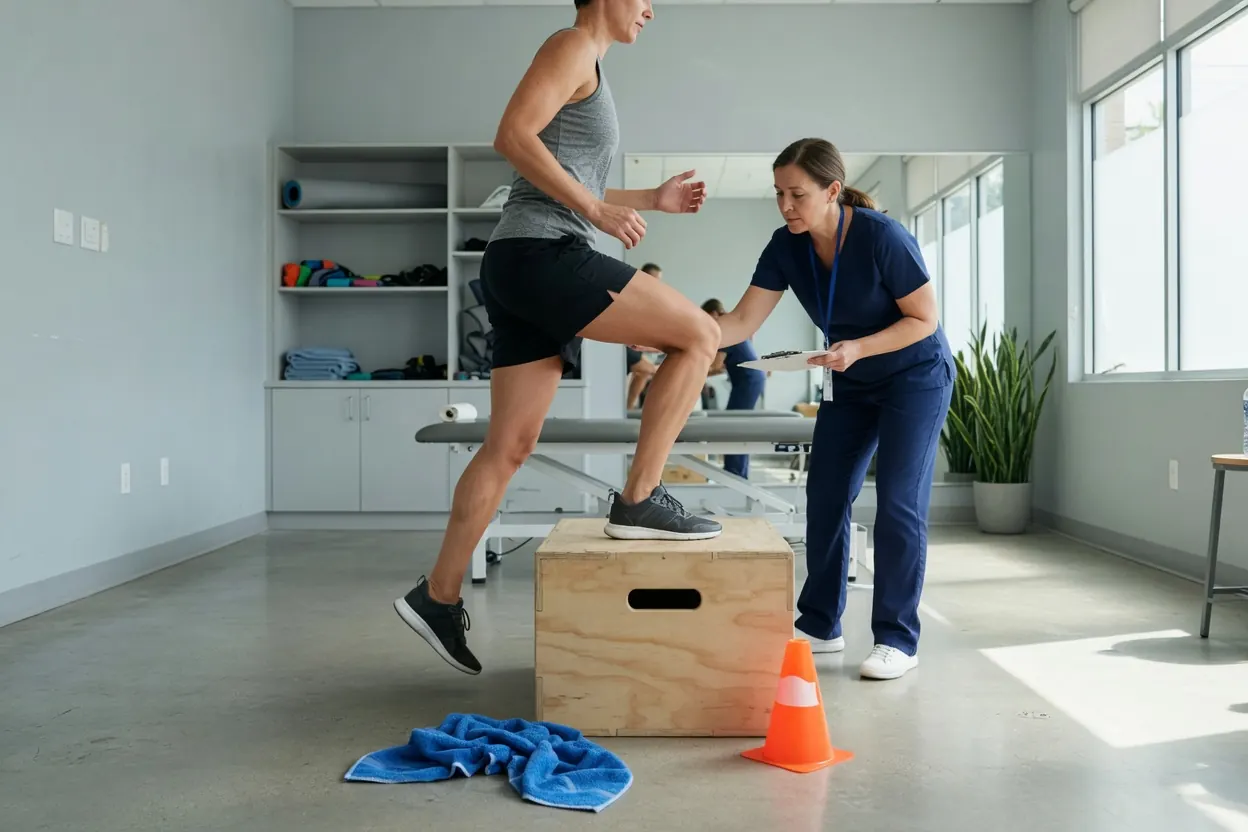
An athlete steps onto a wooden box while a physiotherapist watches the knee

05

Sports rehabilitation

Returning to sport is not the same as returning to a walk. Speed, landing, changing direction, and fatigue ask for more than pain being quiet at rest.

Sports rehabilitation looks at the movement the sport demands and rebuilds it gradually. We do not guarantee a start date. If a doctor or coach already set a frame, we work inside it.

  • Movement specific to your activity
  • Speed and load added gradually
  • A clear talk about what is still too soon

Book this therapy

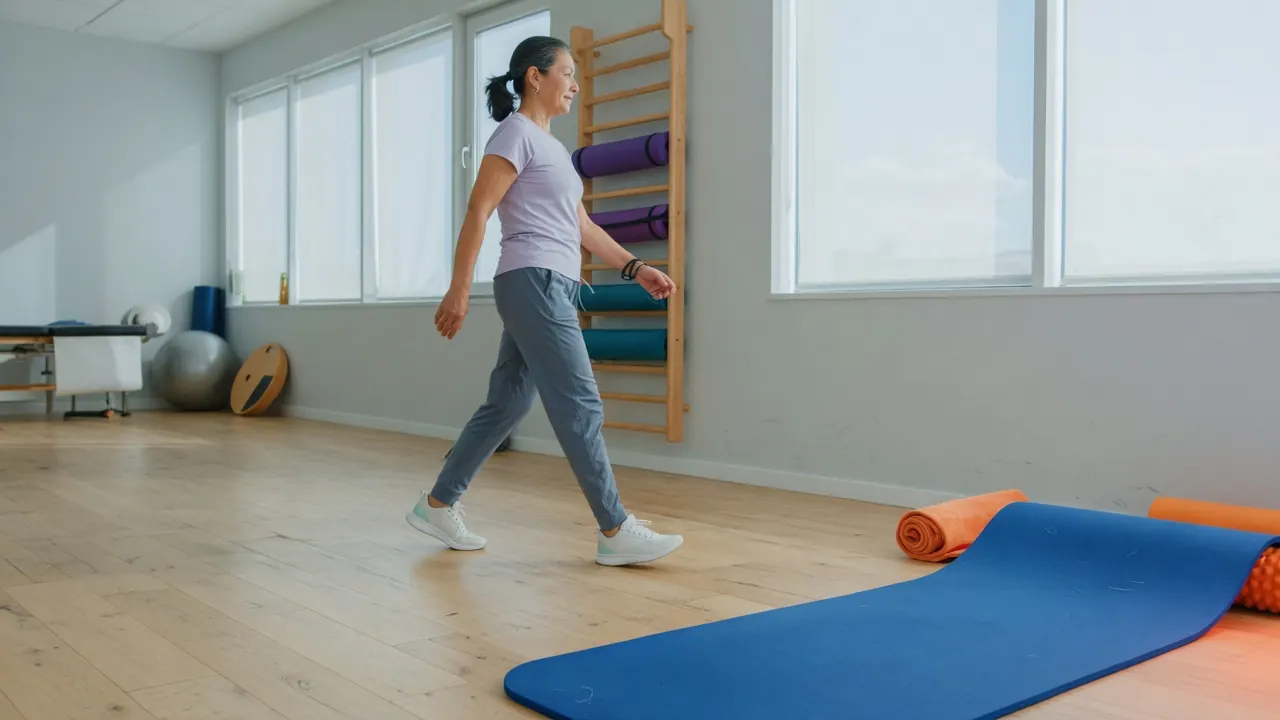
An adult walking at an easy pace through a bright exercise room

06

Mobility and functional movement

Mobility is not forcing the end of a range. It is being able to turn, bend, reach, and walk without the body feeling like a brake.

Functional movement is tied to real tasks: standing up, stairs, carrying, turning in bed. Steadiness and range belong together. One without the other rarely fixes a day.

  • Movements taken from your real day
  • Balance alongside range
  • Less hesitation in ordinary tasks

Book this therapy

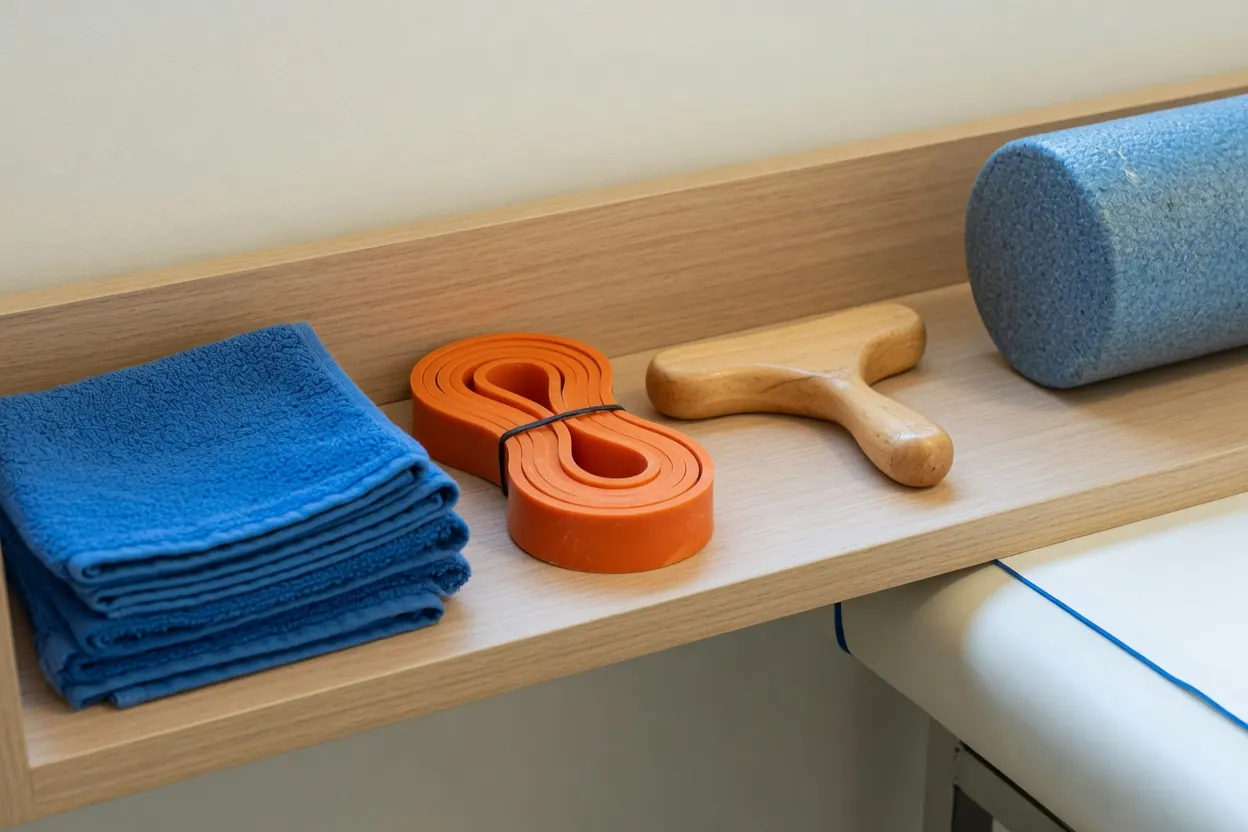
Folded towels, an orange band, a wooden tool, and a roller on a wooden shelf
Equipment helps. The plan still starts with a conversation, not with a device.

How to choose if you are not sure

If you want a clearer picture of how you move, and a plan for daily life, start with individual physiotherapy.

If stiffness gets in the way and you want hands-on work alongside exercise, look at manual techniques.

After an injury, a procedure, or a long pause, rehabilitation is the natural door.

A return to training calls for sports rehabilitation. If you already know you want guided exercise, therapeutic exercise is the direct path.

If the goal is easier walking, turning, or reaching, mobility and functional movement fits. If you are still unsure, say so on the form. The first conversation is there to sort it out.

Common questions

What is a first visit like?

We talk about what brought you in and what you want to do again. Then we briefly look at a movement that matters to you and agree a first goal small enough to keep. The exact path depends on your needs and on any advice you already have from a doctor.

Do I need a medical check first?

If you have strong pain, a recent injury, surgery, or another health condition, a medical check and a report can matter before therapy. Bring any advice you already have. Physiotherapy does not replace a doctor's diagnosis.

How is a therapy plan decided?

The plan is shaped after the conversation and a look at how you move, around a goal we set together. It is not the same for everyone, and it changes if your movement or your day changes. We do not promise a particular result or deadline.

What should I bring?

Clothes you can move in, the shoes you usually wear, and any reports or instructions you have. A short note about what you have been doing lately helps the conversation.

How do I book a visit?

Use the form on the contact page, or write or call. We reply with a suggested time. The details on this site belong to a portfolio project and are not the contact of an active clinic.

Tell us what you want to do again.

On the form you can choose a service, or say that you are not sure yet.

Book a visit